Urban Soils: The Hidden Foundation of City Life
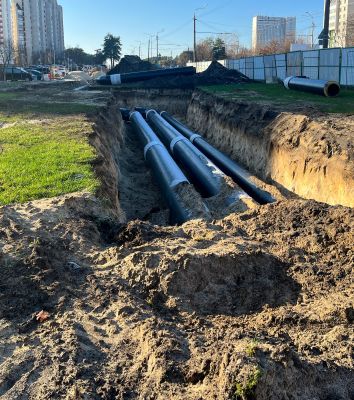
Urban Infrastructure in Soil. Credit: Adobestock
Have you ever wondered what’s under the asphalt and concrete of your city? Beneath every park, sidewalk, and skyscraper lies urban soil, a complex that is vastly different from the soil in the rural area. Urban soils, also known as anthropogenic soils (Anthrosols) are soils that have been significantly altered or created by human activities. These soils tell the story of our cites and play a crucial role in urban life that most people never consider.
Unlike natural soils, which develop over thousands of years through gradual pedogenic processes, urban soils are largely the product of human disturbance rather than in-situ formation. When cities are built, existing soils are excavated, compacted by heavy machinery, mixed with construction debris, and sometimes contaminated with chemicals. This disturbance does not accelerate soil development. Rather, it resets it, with the resulting human-altered material effectively becoming new parent material, subject to the same soil-forming factors as any undisturbed soil in the region. Consequently, a single city block may contain materials from multiple source locations, blended with brick fragments, concrete, and other anthropogenic constituents. In New York City, for example, scientists have documented soils containing artifacts from the 1800s alongside modern construction debris, reflecting layers of successive disturbance rather than continuous pedogenic development.
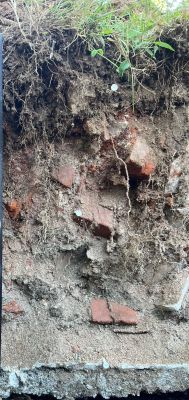
Artesol Soil Horizon. Credit: Randy Riddle, USDA-NRCS
Characteristics of Urban Soils
Urban soils have several distinct characteristics. They are often compacted by heavy foot traffic and construction machinery, which presses soil particles tightly together and reduces air and water movement. Contamination may also occur, as materials like lead from old paints, vehicle oils, and industrial chemicals accumulate over time. Many urban soils are sealed, where concrete and asphalt surfaces block water and air from reaching the soil below. In addition, urban soils tend to be highly mixed, with layers disturbed and blended with foreign materials such as rubble, glass, and construction debris.
Where Do We Find Urban Soils?
Urban soils are found in cities all around the world, from the United States and Japan to Nigeria and beyond. In the United States, urban areas make up only about 3% of the land surface, yet they support more than 80% of the population. These soils occur in a wide variety of places, including city parks and gardens, street tree pits, vacant lots, green roofs, urban farms, and even residential yards and lawns.
Can Urban Soils Support Life?
Despite their challenge, urban soils perform vital functions. They filter stormwater, reducing flooding during heavy rains. In Central Park, New York, the soil absorbs millions of gallons of rainwater annually, preventing it from overwhelming the city's sewer system. Urban soils also support urban forests, which cool cities by up to 9°F during hot summer days. Community gardens in cities demonstrate that with proper management, urban soils can even produce fresh food for local communities.
What Challenges Do Urban Soils Face?
Urban soils face several major challenges, particularly compaction and contamination, both of which affect environmental quality and human health. Compaction and surface sealing from construction and urban infrastructure reduce water infiltration while increasing runoff, erosion, flooding, and downstream pollution of water bodies. Contamination is another serious concern, especially from heavy metals such as lead, which has been widely documented in the soils of many older U.S. cities, although its distribution varies depending on land-use history, traffic density, and past industrial activities (Mielke & Reagan, 1998; Laidlaw & Filippelli, 2008). Cities are increasingly implementing management strategies to address these issues. Approaches to reduce compaction include compost additions to improving soil structure, tree planting to increase organic matter, and bioswale construction to enhance infiltration and filter pollutants, while contaminated soils are managed through remediation, clean-fill capping, phytoremediation using metal-accumulating plants, and raised-bed gardening with imported soil to reduce human exposure and restore soil function.
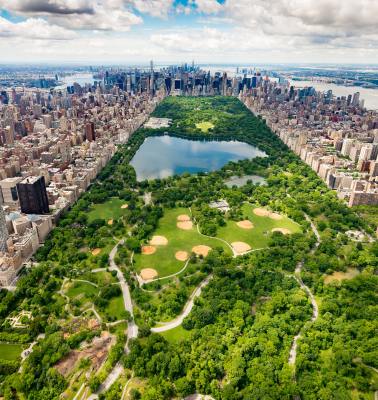
Central Park, NYC. Credit: Adobestock
Looking Forward
As cities continue to expand and are projected to house 68% of the world's population by 2050, understanding and caring for urban soils is becoming more important than ever. Healthy urban soils are the foundation of sustainable cities, supporting green space, urban farms, and the resilience needed to face a changing climate.
Suggested Teacher Activities and Information:
Lead in Soil EPA Overview | Test for Lead in Soil Activity (links to Science Buddies)
Soil Compaction (Rain and Soil) | Supplemental Document
References
Laidlaw, M. A. S., & Filippelli, G. M. (2008). Resuspension of urban soils as a persistent source of lead poisoning in children: A review and new directions. Applied Geochemistry, 23(8), 2021–2039. https://doi.org/10.1016/j.apgeochem.2008.05.009
Lehmann, A., & Stahr, K. (2007). Nature and significance of anthropogenic urban soils. Journal of Soils and Sediments, 7(4), 247–260. https://doi.org/10.1065/jss2007.06.235
McPherson, E. G., Simpson, J. R., Peper, P. J., Maco, S. E., & Xiao, Q. (2005). Municipal forest benefits and costs in five U.S. cities. Journal of Forestry, 103(8), 411–416. https://doi.org/10.1093/jof/103.8.411
Mielke, H. W., & Reagan, P. L. (1998). Soil is an important pathway of human lead exposure. Environmental Health Perspectives, 106(Suppl 1), 217–229. https://doi.org/10.1289/ehp.98106s1217
Nowak, D. J., & Walton, J. T. (2005). Projected urban growth (2000–2050) and its estimated impact on the US forest resource. Journal of Forestry, 103(8), 383–389. https://doi.org/10.1093/jof/103.8.383
NYC Department of Parks & Recreation. (2022). How NYC Parks fights climate change: Cleaning our water and protecting flood-prone communities. https://www.nycgovparks.org/learn/sustainability/cleaning-our-water-and-protecting-flood-prone-communities
Shaw, R. K. (2001). New York City reconnaissance soil survey. USDA Natural Resources Conservation Service. https://www.soilandwater.nyc/files/c9ab6cd08/reconnaissance_soil_survey_report.pdf
United Nations, Department of Economic and Social Affairs, Population Division. (2018). World urbanization prospects: The 2018 revision. United Nations. https://population.un.org/wup/
U.S. Census Bureau. (2020). 2020 Census urban and rural classification. https://www.census.gov/programs-surveys/geography/guidance/geo-areas/urban-rural.html
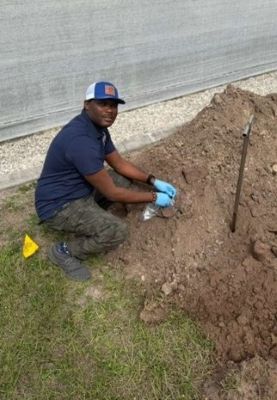
Author Oluwasegun Olubisi. Credit: O. Olubisi"