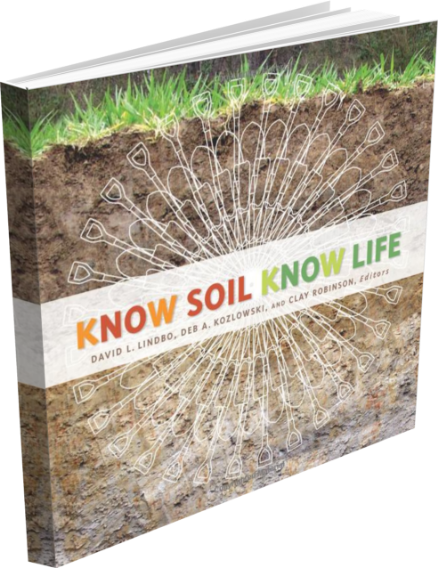
The United Nations declared 2015 the International Year of Soils!
As part of this global celebration and awareness campaign, the Soil Science Society of America developed a set of 12 videos, centered around SSSA's monthly communications themes. The goal of these videos is to raise public awareness of the value of soils and soil science; visibility of soil scientists in their communities; and, highlight soils.org as the premiere place to find soils information. Share these videos with your colleagues, students, and friends!
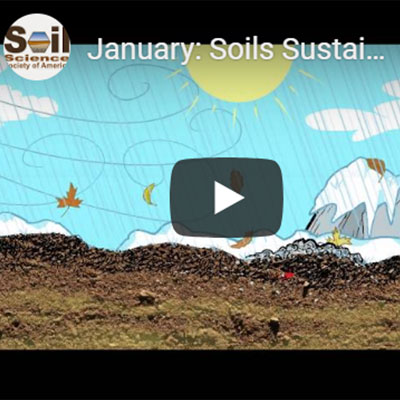
January: Soils Sustain Life | (download video)
This introductory video highlights soil as the foundation of life on land, how soil forms from weathered rock and provides crucial ecosystem services.
View the following pages for supporting information: Soil Basics | Soil Formation | Soil and People | Soil & the Environment
Suggested Activity: “Soils are Everywhere!”
Guiding questions: What does it mean that soil is the foundation of life on land? How do soils form from weathered rock, and what crucial ecosystem services do they provide to support life on Earth?
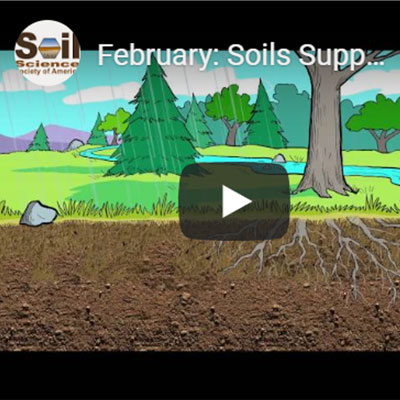
February: Soils Support Urban Life | (download video)
This video focuses on the importance of soil in cities (urban gardening, stormwater, etc.)
View the following pages for supporting information: Engineering and Urban Development | Soil & the Environment
Suggested Activites: Urban Stormwater Management | Guide to Rain Garden Construction
Guiding questions: How do soils contribute to life in cities and make urban environments more sustainable (for example, through community gardens or green spaces)? In what ways can healthy soil help cities handle challenges like stormwater runoff and pollution?
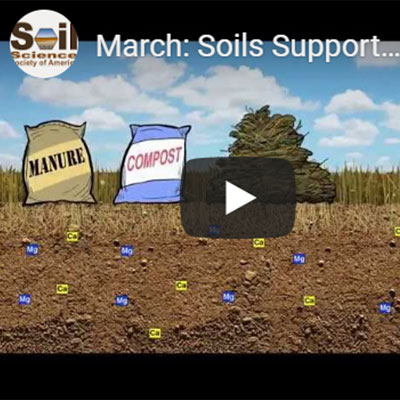
March: Soils Support Agriculture | (download video)
This video focuses on our global food supply, nutrients that come from soil, and water needs for plants and irrigation.
View the following pages for supporting information: Soil and Food | Soil Fertility
Suggested Activity: Soils, Food, and Health
Guiding questions: Why is healthy soil so critical for agriculture and our food supply? What role does soil fertility play in crop growth, and how do soils affect the quality and quantity of the food we eat?
April: Soils Clean and Capture Water | (download video)
This video illustrates how soil filters and stores water.
View the following pages for supporting information: Soil & the Environment | Soil Physics | Engineering and Urban Development
Suggested Activities: Soil is a Filter | Runoff Simulation | "Pouring" Through the Soil for Clean Water
Guiding questions: How does soil act as a natural filter for water, removing impurities as water passes through it? In what ways do soils capture and store rainfall, and how does this help prevent flooding or drought in the environment?
May: Soils Support Buildings/Infrastructure | (download video)
This video discusses the role of soil in supporting structures and buildings.
View the following pages for supporting information: Engineering and Urban Development | Soil & the Environment | Soil Physics
Suggested Activity: Protecting Our City with Levees
Guiding questions: Why is soil important for supporting buildings, roads, and other infrastructure? What can happen when soil becomes unstable or erodes beneath structures, and how does that affect the safety of buildings or engineering projects (like bridges or levees)?
June: Soils Support Recreation | (download video)
This video focuses on soil’s contributions to recreation and leisure (from parks and forests to sports fields).
View the following page for supporting information: Soil & the Environment
Suggested Activities: Got Clean Lakes? Thank your Soil | On the Trail Again: Soil Compaction and Its Effects
Guiding questions: What role do soils play in the recreational spaces we enjoy (such as providing solid ground for parks, forests, campgrounds, or sports fields)? What happens to soil when lots of people hike or play on it (think soil compaction on trails), and how does compacted soil affect water runoff or the overall health of those recreation areas?
July: Soils are Living | (download video)
This video emphasizes that soil is alive with organisms.
View the following pages for supporting information: Soil Biology | Soil Basics
Suggested Activities: Meet the cast: Soil Biology | The Microbe Zoo and Dirtland
Guiding questions: Why do we say that soil is a living system? What kinds of organisms live in the soil (from microscopic bacteria and fungi to earthworms and insects), and how do all these living things work together to keep soil healthy and productive?
August: Soils Support Health | (download video)
Soil’s connection to human health in this video spans food nutrition, disease protection, and even medicine from soil.
View the following pages for supporting information: Human Health and Medicine | Soil and Food
Suggested Activities: Soil Health Scavenger Hunt | Unlocking the Untapped Antibiotic Potential of Soil Microbes
Guiding questions: How does soil contribute to human health, for example through the nutrients it provides to our food? In what surprising ways can soil and soil organisms help protect our health such as naturally fighting diseases or even providing new medicines (like antibiotics discovered in soil microbes)?
September: Soils Protect the Natural Environment | (download video)
This video surveys how soils underpin various ecosystems (forests, prairies, wetlands, deserts, etc.).
View the following pages for supporting information: Soil & the Environment | Around the World
Suggested Activities: Soils Sustain Life | Factors of Soil Formation | use “biome” as a search topic in Lessons and Activities to bring up activities related to specific biomes.
Guiding questions: How do different ecosystems (forests, prairies, wetlands, deserts, etc.) depend on their soils, and how do soils help sustain the plants and animals in each of these environments? Why are healthy soils essential for protecting natural environments and maintaining biodiversity?
October: Soils and Products We Use |(download video)
Resources from the soil become products we use everyday including food and non-food items.
View the following pages for supporting information: Soil and Food | Soils and Culture
Suggested Activity: Farm to Table
Guiding questions: How do resources from soil end up as part of the products we use every day? (For example, think about how soil nutrients help grow the food on our table such as a “farm to table” connection.) What are some non-food products that come from or depend on soil (such as building materials, pottery/clay, fabrics like cotton, or pigments for art)?
November: Soils and Climate | (download video)
This video explores how soils interact with climate such as carbon sequestration, greenhouse gases, drought and desertification, and even clues about past climates.
View the following pages for supporting information: Soil & the Environment | Soil Chemistry
Suggested Activities: Desertification and the American Dust Bowl | Tea for Science
Guiding questions: In what ways do soils interact with Earth’s climate? For instance, how can soil help fight climate change by storing carbon, and how do farming or land use practices affect greenhouse gas emissions from soil? What can soil tell us about climate-related events, for example, what did the Dust Bowl teach us about the relationship between soil mismanagement, drought, and climate, or how might soil layers preserve clues about past climates?
December: Soils, Culture, and People | (download video)
This final video highlights the cultural dimensions of soil from art and literature to spiritual beliefs and forensic uses.
View the following pages for supporting information: Soils and Culture | Forensics and Archaeology
Suggested Activities: CSI: Forensic Soil Analysis | Soil Crayons | Paint with Soil!
Guiding questions: How have soils influenced human culture throughout history (consider things like art made with soil pigments, clay pottery, traditional building materials, or even spiritual beliefs about soil)? In what ways do scientists use soil to learn about people and the past, for example, how can soil analysis be used in archaeology to study ancient civilizations or in forensic science to help solve crimes?