What Happens Beneath the Flames?
Wildfire is a fire that burns out of control in forests, grasslands, or other natural areas. It can be started by lightning, by people, or by accidents, and it can spread fast depending on the weather conditions, plant types, and land. It may look like wildfires only burn trees and brushes, but what about the soil underneath? How does fire change the very ground we walk on? In the United States of America, where millions of acres burn every year, understanding what happens to soil during and after fire is key for recovery, water quality, and ecosystem health.
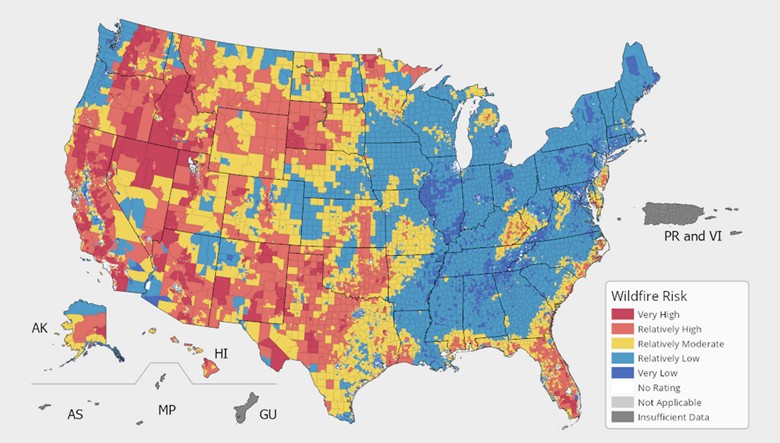
Source: https://hazards.fema.gov/nri/wildfire
Figure 1: Map rating wildfire risk
What Is Soil, and What Happens When Fire Hits?
Soil is more than dirt. It is a living system made of minerals, water, organic matter, and tiny organisms. When wildfire passes over the land, the soil’s physical, chemical, and biological properties change dramatically. The severity of those changes depends on how hot the fire is and how long it burns.
The physical changes affect the soil’s structure. The intense heat from wildfire can dry out the soil and break apart the small clumps of particles called aggregates. When this happens, the soil can become more compact and less able to hold water and air. Bare soils also become more susceptible to wind erosion. In some cases, heat can create a water-repellent layer in the soil, meaning rainwater cannot soak in easily and instead runs off the surface.
Chemical changes also occur. Plants, leaves, and other organic materials burn, turning into ash. This ash can add some nutrients such as calcium and potassium to the soil. Severe fire can also cause important nutrients like nitrogen to be lost into the air as gas. As a result, the balance of nutrients in the soil may change. This can affect how plants grow in the future. Biological changes involve living organisms in the soil. Soil is full of life, including bacteria, fungi, insects, and tiny roots that break down organic matter and recycle nutrients. High temperature from wildfires can kill or reduce many of these organisms, especially near the soil surface. Since these organisms help break down organic matter and recycle nutrients, their loss can slow soil recovery after a fire.
Organic Soils and Fire: A Hidden Risk
Organic soils are soils that contain a large amount of decayed plant material, such as leaves, roots, and peats. These soils are common in wetlands, forests, and areas with lots of plant buildup over time. Because they are rich in carbon, organic soils can act like fuel during wildfire. When a fire reaches organic soil, it doesn’t just burn on the surface. It can smolder underground for days, weeks, or even months. This type of burning is hard to detect and can restart wildfires even after flames appear to be out. That is why organic soils are considered especially dangerous during fire events. For this reason, it is important to be careful around these soils. Even small sparks like those from a flare or equipment can ignite organic soil, especially when it is dry. The organic material acts like a slow-burning fuel, allowing fire to spread below the surface where it is harder to control.
Are Wildfires Good or Bad for Soil?
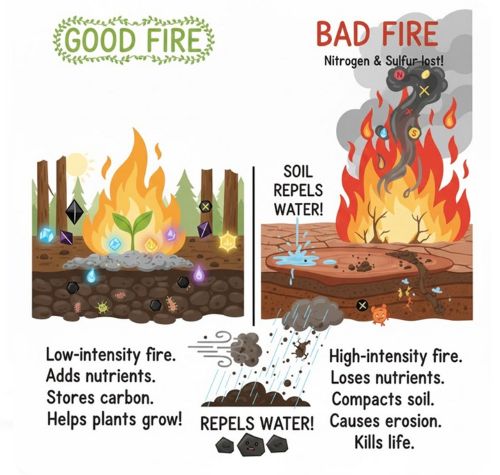
Impact of wildfires on soil. Credit: Olubunmi Faturoti
The answer is both. When fires are of low intensity, not all organic matter burns. Some ash remains on the surface, adding nutrients like potassium, calcium, and magnesium that benefit plants. Low-intensity fire also transforms carbon in soil into a more stable form (called pyrogenic carbon), which resists decomposition and helps store carbon for longer periods of time. On the other hand, high-intensity fire cooks organic matter, volatilizing (turning into gas) important nutrients like nitrogen and sulfur. Soil structure collapses, aggregates breakdown, porosity drops, and the soil can become more compact.
A dangerous change is called hydrophobicity, which is when soils repel water. How does this happen? When plants, leaves, and other organic materials burn, they release waxy and oily compounds. The heat causes these compounds to vaporize and move downward into the soil, where they cool and coat soil particles with a thin water-repellent layer … making the soil hydrophobic. When rain falls on a hydrophobic soil, it runs off instead of soaking in (infiltration). Hydrophobicity is less common with grass fires because generally they burn quickly, are not as hot, and grasses have fewer waxy and oily compounds.
Microbial life (bacteria, fungi, tiny roots) often dies or declines sharply after a fire. Exposed soil is vulnerable to erosion. Without plant cover, rain or wind can wash or blow soil away, especially on steep slopes.
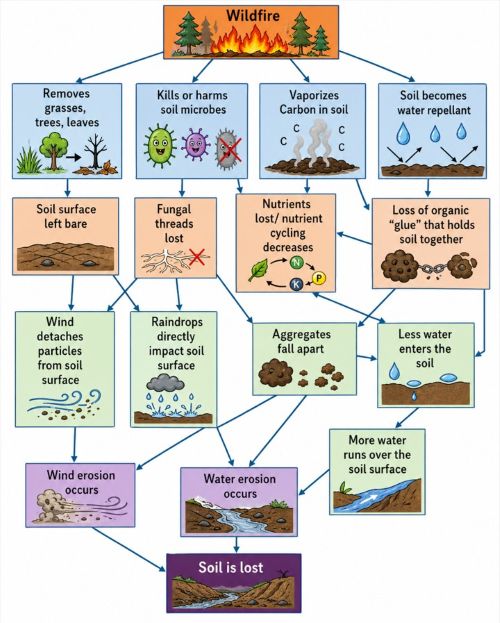
Image credit: Olubunmi Faturoti
Figure 3: Wildfire Impacts on Vegetation, Soil, and Water Runoff
What About Long-Term Effects and Recovery?
Even after the flames are out, the soil keeps changing. Ash left behind by burned plants can make soil more alkaline and temporarily increase some nutrients. At the same time, some organic matter breaks down faster, which can change how soil microbes grow and how nutrients move through the soil. Over time, the community of soil microbes such as bacteria and fungi will recover. However, the types of microbes may be different from before the fire, which can affect how nutrients cycle and how plants grow back. Burned areas also face a higher risk of erosion because the soil surface is exposed and plant roots that once held the soil in place may be gone.To help the land recover, land managers often take steps to protect the soil after wildfire. They may spread mulch, straw, or wood chips to cover the soil and reduce erosion or plant grasses and native plants to stabilize the ground. In some cases, barriers such as logs or erosion-control mats are used to slow water runoff, helping soil stay in place while plants and soil life gradually recover. These strategies are difficult to implement after wildfires that cover 20,000 to more than 200,000 hectares, especially in low precipitation regions where successfully establishing grasses and native plants is dependent upon unreliable precipitation.
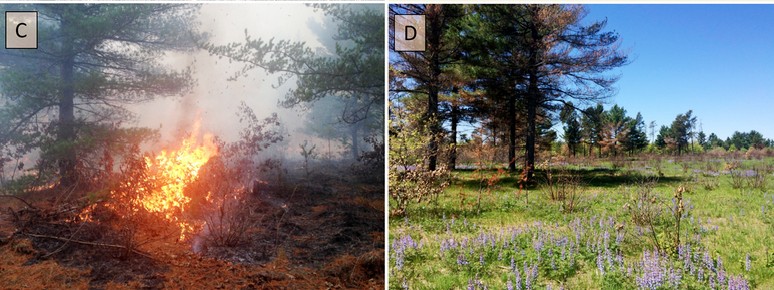
Side by side picture of a prescribed burn (left) and recovery (right). Credit: https://acsess.onlinelibrary.wiley.com/doi/10.2136/sssaj2018.09.0342
Why Should Teachers and Students Care?
Many wildfires occur in the western United States, where dry climates, seasonal drought, and steep landscapes make fires more common and their impacts more severe. After wildfire, the loss of plants and the changes in soil can make the land more vulnerable to erosion, especially during heavy rainstorms. Soil that cannot absorb water easily may cause more runoff, which can carry sediment and burned materials downhill. This runoff can move ash, nutrients, and sometimes toxic metals into nearby rivers, lakes, and reservoirs. When these materials enter water systems, they can reduce water quality and create problems for ecosystems and for people who depend on these water sources for drinking and farming. Communities downstream may therefore face higher costs and challenges in treating and managing their water supplies after large wildfire events.
In addition, smoke from fires and the wind erosion that follows creates hazardous road conditions and reduced air quality. The places where there are limited amounts of rain, such as grasslands and prairies, and almost no perennial rivers and streams seldom have water erosion problems. However, those really flat areas, where high winds follow fires generate a lot of wind erosion due to many of the same factors mentioned that increase water erosion.
Understanding how soil properties change after wildfire helps scientists and land managers respond more effectively. By studying these changes, they can decide how best to restore burned landscapes, control erosion, and safely replant vegetation. This knowledge is important for protecting ecosystems, maintaining clean water, and helping forests and grasslands recover over time.
Suggested Classroom Activities / Teacher Resources
i. Soil sampling simulation: Have students simulate fire effects by heating (safely) small soil samples and comparing infiltration rates or pH before and after.
ii. Soil Hydrophobicity - Use trays with “burned” vs “unburned” soil to model water repellent behavior and runoff.
References
Barra, C., Fule, M., Beers, R., Mcguire, L., Youberg, A., Falk, D., and Rasmussen, C. (2025). Soil biogeochemical and hydraulic property response to wildfire across forested ecosystems of the Santa Catalina Mountains, Arizona, USA. Catena, 250, 108802.
Sankey, J. B., Hawbaker, T. J., McVay, J. L., & others. (2017). Sankey, J. B., Kreitler, J., Hawbaker, T. J., McVay, J. L., Miller, M. E., Mueller, E. R., Vaillant, N. M., Lowe, S. E., and Sankey, T. T. (2017). Climate, wildfire, and erosion ensemble foretells more sediment in western U.S. watersheds. Geophysical Research Letters, 44(17), 8884–8892. https://doi.org/10.1002/2017GL073979
U.S. Geological Survey. (2017). Wildfires may double erosion across a quarter of western U.S. watersheds by 2050. U.S. Department of the Interior. https://www.usgs.gov/news/wildfires-may-double-erosion-across-quarter-w…
Author: Olubunmi Faturoti