Pollinators as Storytellers of Soil Stewardship
Soils are living systems that serve as the foundation of agricultural productivity and ecosystem sustainability. Soils support plant growth, and provide habitat for a wide range of soil organisms, from macrofauna such as earthworms, beetles, termites, ants, and millipedes to microfauna including fungi, nematodes, and protozoa. Mycorrhizal fungi form extensive networks that link plant communities and facilitate nutrient exchange, creating conditions that support diverse aboveground ecosystems. This belowground biodiversity can manifest aboveground in the form of abundant wildlife, rich plant communities, and active pollinator populations. Native vegetation further strengthens these connections by supporting local species adapted to regional soil and climate conditions.
Healthy soils lead to nutrient-rich crops and resilient agroecosystems connecting soil function directly to human health and agricultural sustainability. Long-term agroecosystem vitality is facilitated by soil stewardship, the caring of the soil in function of its foundational capacity to sustain flourishing and thriving ecosystems.
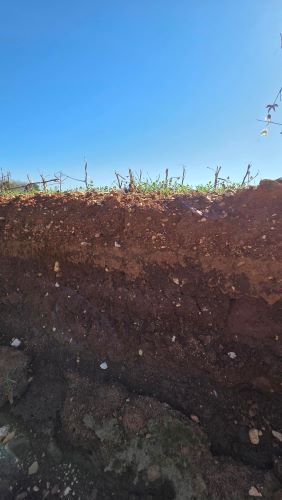
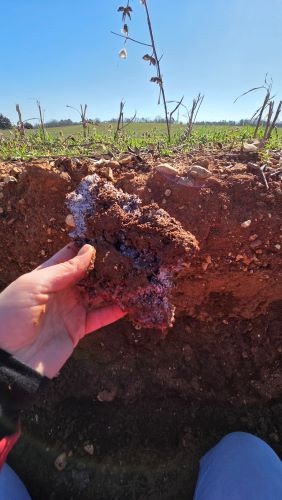
Figure 1. Roadside Soil Profile, Alabama; Figure 2. Ice in Soil Pores, Alabama
(Credit Fig. 1-2: Patricia Marie Cordero Irizarry)
Pollinators as Visible Indicators of Soil Health
Direct assessment of soil health requires measurements of parameters such as soil pH, organic matter, microbial activity, and root development. Although these metrics are essential, they are not always easily observed. In contrast, aboveground biological indicators can provide quick, visible cues, and pollinators offer one of the clearest signals of underlying soil and plant system function.
Pollinators sustain plant reproductive processes by transferring pollen during their routine foraging behavior. While bees and butterflies receive much of the attention, many bird species also act as pollinators. Hummingbirds are the most well‑known in North America, but any bird that inadvertently transfers pollen from anthers to stigmas meets the definition of a pollinator. A diverse and active pollinator community often reflects healthy soil conditions that support flowering plant abundance, structural habitat diversity, and stable resource availability. As Elmquist et al. (2023) discussed, belowground biological diversity directly shapes aboveground ecological structure by influencing habitat complexity and resource distribution.
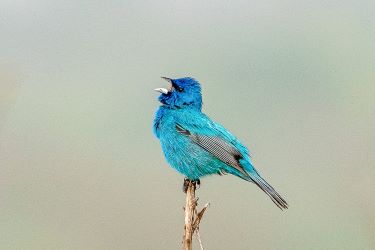
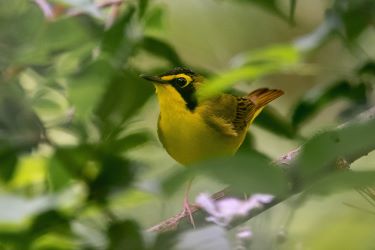
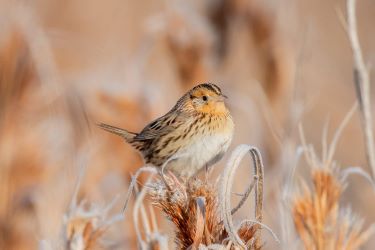
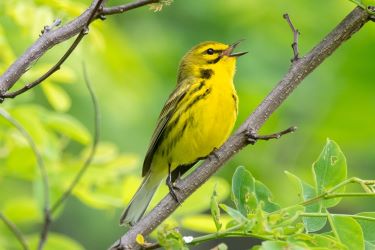
Figure 3. Indigo Bunting, Tennessee; Figure 4. Kentucky Warbler, Kentucky
Figure 5. LeConte’s Sparrow, Alabama; Figure 6. Prairie Warbler, Kentucky
(Credit Fig. 3-5: Andrew Lydeard)
Soil Health as a Driver of Plant–Pollinator Interactions
Research demonstrated that soil health influences plant growth, floral traits, and pollinator visitation patterns. Davis et al. (2023) found that soil management legacy, the cumulative impact of organic versus conventional practices, affects floral rewards, plant-pollinator interactions, herbivory, and plant associations with beneficial fungi and pathogens. Agroecological practices that reduce agrochemicals and enhance floral diversity can strengthen pollinator diversity, and improve crop performance. By simply inviting birds into various habitats, their fecal inputs can improve soil health. For example, Firth et al. (2020) found that flooding rice fields in winter increases the bird use of such fields, which can increase nitrogen input up to 13%, thereby reducing the need for additional fertilizers. Thus, soil needing revitalized nutrient inputs may benefit by creating bird and pollinator–friendly systems.
Soils with balanced nutrient availability, sufficient organic matter, and favorable physical structure support robust plant development, including flower and crop production. Rust et al. (2024) found that flowering plant abundance increased alongside soil macrofauna abundance. Additionally, they reported that soil and plant C:N ratio and soil pH strongly influenced plant and insect diversity, emphasizing the role of nutrient availability in shaping soil–plant–pollinator interactions. These conditions provide pollinators with the nectar, pollen, and habitat resources they require. In contrast, when soils degrade, biodiversity decreases above and belowground, and pollinator communities often decline accordingly.
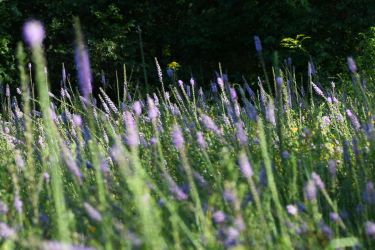
Figure 7. Dense Blazingstar, Alabama
(Credit: Andrew Lydeard)
Management Practices that Support Soil-Plant-Pollinators Interactions
Soil conservation practices that support pollinator activity overlap significantly with those that enhance soil health and carbon sequestration. Effective strategies include:
- Incorporating cover crops
- Reducing tillage
- Minimizing agrochemical inputs
- Integrating native plants
- Implementing contour farming
- Promoting polyculture and diversified systems
- Establishing vegetative buffers, especially around wetlands and water sources
- Preventing erosion and runoff
These practices support organic matter accumulation, nutrient cycling, soil structure, and water retention, all of which contribute to resilient plant and pollinator communities. Working with natural processes rather than against them embodies the core principles of soil stewardship.
Soil Storytellers
A visible expression of soil stewardship is the presence and well-being of pollinators, which reflect healthy soil systems, resilience plant communities, and the ecological integrity upon which agriculture depends. In essence, pollinators are storytellers of soil dynamics, visible messengers of soil stewardship. Monitoring pollinators through structured bird surveys, pollinator transects, or citizen-science initiatives provide an accessible framework for evaluating soil management outcomes and can be used by many different entities. The results of these assessments can be used to inform and benefit multiple stakeholders, from farmers, conservationists, researchers, extension professionals, educators, land managers and owners, and community members. Declines observed in monitored pollinator populations must be interpreted within a broader ecological context; stressors such as habitat loss, climate variability, and predation also shape pollinator dynamics. Therefore, pollinator responses should be evaluated alongside direct soil and plant health indicators to avoid oversimplified causal assumptions.
Examples of soil-plant-bird activities for K-12:
1. Soil to Sky Systems Map – Students create a diagram linking soil, plants, pollinators (birds), and humans to represent nutrient and energy flow in the ecosystem.
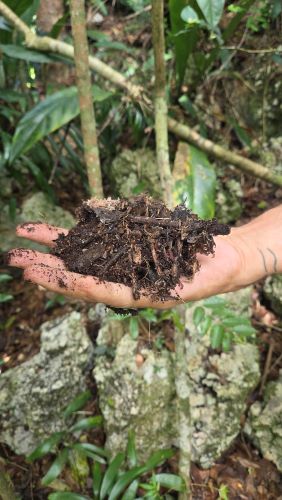
Figure 8. A Handful of Organic Matter, Puerto Rico
(Credit: Patricia Marie Cordero Irizarry)
2. Build-A-Bird-Sanctuary – Students design a garden that attracts birds and insects using native plants to their ecoregion, a freshwater source, and adopt soil health practices such as composting, no till, and soil coverage.
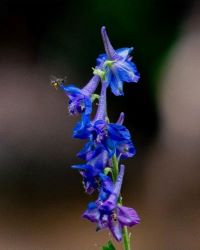
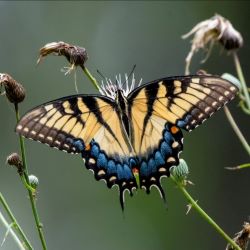
Figure 9. Carolina Larkspur, Alabama; Figure 10. Tiger Swallowtail, South Carolina
(Credit Fig. 9-10: Andrew Lydeard)
3. Bird Clues – Students go on a bird walk to interpret ecological signals, such as bird calls, to reflect on visible soil processes, such as healthy plants, accumulation of water, and nutrient flow.
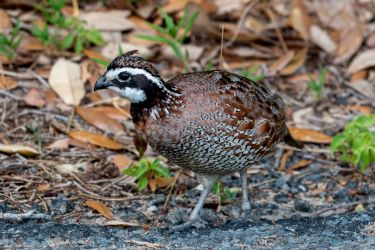
Figure 11. Northern Bobwhite, South Carolina
(Credit: Andrew Lydeard)
4. Hungry Birds, Healthy Soils – Students identify birds by their eating habits and relate that to soil functions, such as pest regulation (insect-eating birds), seed dispersal, and plant diversity.
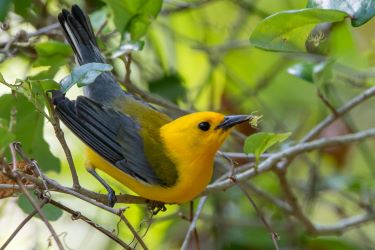
Figure 12. Prothonotary Warbler, Alabama
(Credit: Andrew Lydeard)
Soils are the foundation of life because they support diverse biological communities and sustain agricultural productivity and ecological resilience. Soil stewardship promotes natural resource conservation, biodiversity enhancement, and intergenerational sustainability. When soil is managed responsibly, it supports a vibrant soil–plant–pollinator continuum that ultimately sustains human communities and agricultural systems. By promoting soil stewardship, we support all forms of life.
Chirp in to catch the story.
References
Davis, J. K., Cohen, A. D., Getman‐Pickering, Z. L., Grab, H., Hodgden, B., Maher, R. M., Pelzer, C. J., Rangarajan, A., Ryan, M. R., Ugine, T. A., & Thaler, J. S. (2023). Agricultural soil legacy influences multitrophic interactions between crops, their pathogens and pollinators. Proceedings of the Royal Society B Biological Sciences, 290(2011): 20231453. https://doi.org/10.1098/rspb.2023.1453
Elmquist, D., Kahl, K., Johnson‐Maynard, J., & Eigenbrode, S. D. (2023). Linking agricultural diversification practices, soil arthropod communities and soil health. Journal of Applied Ecology, 60(9), 1952-1963. https://doi.org/10.1111/1365-2664.14453
Firth, A. G., Baker, B. H., Brooks, J. P., Smith, R., Iglay, R. B., & Davis, J. B. (2020). Low external input sustainable agriculture: Winter flooding in rice fields increases bird use, fecal matter and soil health, reducing fertilizer requirements. Agriculture, Ecosystems & Environment, 300, 106962. https://doi.org/10.1016/j.agee.2020.106962
Lal, R. (2024). Soil, soul, spirituality, and stewardship. Journal of Soil and Water Conservation, 79(1), 10A-14A. https://doi.org/10.2489/jswc.2024.1129A
Author: Patricia Marie Cordero Irizarry1, PhD & Andrew Lydeard2, MSc